How Casino Stories Shifted from Private Rooms to Public Spectacle
Explore how casino stories frame private rooms and public spectacle, and learn to read their settings as choices about access, status and drama.
The most common mistake in reading casino stories is to assume that a crowded, glittering scene records a real change in casino life. It can leave a reader with a neat historical story that the text itself cannot support. A better starting point is to ask what the scene makes visible: who enters, who is watched, and what the game allows characters to do.
Casino stories use private rooms to concentrate conflict
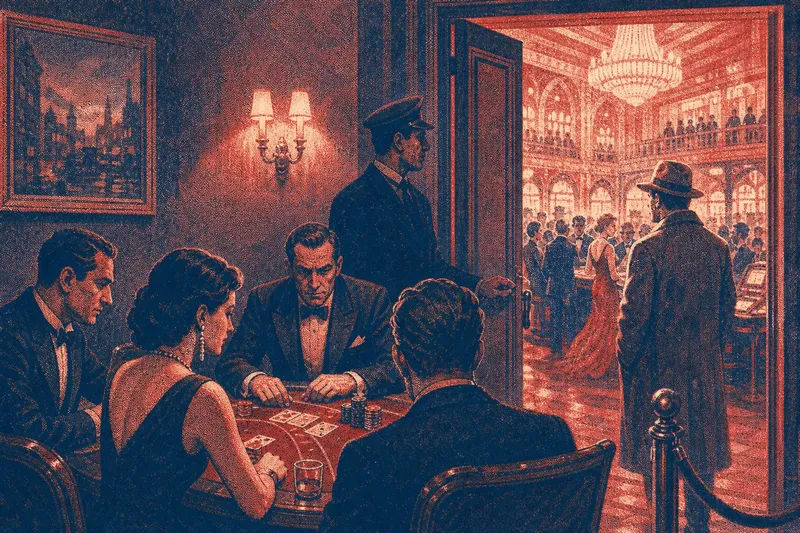
A private gaming room gives a writer a contained stage. Players share rules and turns, but carry different motives into the room. A glance across a card table or a pause before a wager can make ambition, suspicion or embarrassment legible without moving the action elsewhere.
In fiction and theatre, the room may also stand for wealth, rank or secrecy. Those meanings are part of the work’s design. A scene about a concealed meeting beside a gaming table may create suspense; it does not, by itself, describe how often real venues hosted such meetings.
Notice how the room distributes power. Does one character control the door, the money or the pace of play? Does another watch from the edge? These choices reveal the drama’s structure, even when the setting is invented.
Public spectacle is built through visible details
Stories often make a casino feel public through entrances, formal dress, crowds, announcements or displays of wealth. Such details put a venue before an audience, whether that audience consists of characters, theatre-goers or readers. They tell us how the work wants the setting to appear.
That impression is not the same as public access. A crowded room in a novel does not tell us who could enter a real venue, while a grand entrance in a film does not establish how its doors were managed. A story is like a shop window: it arranges selected objects for attention and leaves much of the work behind the glass unseen.
For university students studying casino culture, this distinction offers a useful reading method. Describe the visible choices first, then ask what wider interpretation they support. Keep claims about real venues separate unless independent records address them.
Read the private-room-to-public-spectacle shift as a storytelling pattern
The phrase “from private rooms to public spectacle” can describe a change in a story’s presentation rather than a documented historical sequence. A writer may move from secrecy to display to raise the stakes. A stage production may make that movement especially clear by changing the set, lighting or number of people onstage.
To argue that the phrase describes an actual historical shift, specify the place, period and kind of change at issue. “Public” might mean easier admission, greater visibility, formal entertainment or a venue’s role in local leisure. Each meaning calls for different evidence, so the claim should not slide between them.
Compare like with like. A venue notice may describe admission or an event; contemporary reporting may record how a gathering was presented; a local history may discuss the area around a venue. Read each source for its purpose and scope rather than treating one account as a full picture.
Use these checks to keep a reading precise
- Check whether the story names a real venue. If it does, search for records connected to that place; if it does not, discuss the setting as fictional rather than attaching it to a real casino.
- Check whether the story or its publication has a usable date. If it does, compare it with material from the same period; if it does not, avoid assigning the scene a precise historical moment.
- Check what “public” means in your claim. If you mean entry, look for admission rules or notices; if you mean spectacle, look for descriptions of display or public events.
- Check who produced each source and for whom. If it is promotional, read it as the venue’s presentation of itself; if it is administrative or journalistic, consider its specific purpose before relying on it.
- Check whether a record concerns one venue or a wider area. If it concerns one place, keep the conclusion local; if it makes a broader claim, seek other relevant material before extending it.
- Check whether fiction is being used to describe actual conduct. If it is, look for contemporary records about that conduct; if suitable records are unavailable, state that the historical question remains unresolved.
A worked reading can separate drama from history
Say you are reading an invented play with no stated date. It has one venue, called the Blue Room, and one scene: a doorkeeper admits a wealthy character but turns away a visitor who cannot pay. You want to know whether this represents a move towards public access.
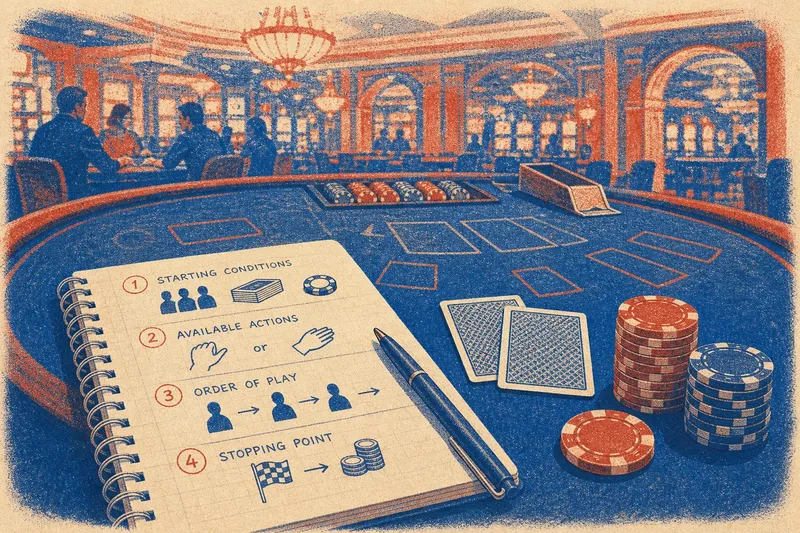
First, record the starting inputs: one invented venue, one admission scene and no date. Next, separate what the scene directly shows from what you want to know. It shows that the play uses money and a doorway to stage unequal access; it does not identify a real casino or establish its admission rules.
Then choose the next action. Because the play gives no real venue or period, searching for records of the Blue Room would not answer the historical question. The decision is to treat the scene as evidence of the play’s concern with status, while leaving real-world access unclaimed. If a later edition or programme names an actual venue and date, that would provide a more grounded starting point for a different search.
Different forms make casino settings mean different things
A stage production can make ceremony visible with a doorway, a table and a small number of props. A novel can linger over private thoughts that an audience could not see. Film can guide attention through framing, sound and editing. Each form shapes the viewer’s or reader’s experience of a casino without automatically describing a real one.
Genre matters, too. Comedy may use a gaming room to stage embarrassment; crime fiction may turn it into a place of deception; romance may make play a test of trust. The casino setting stays recognisable, but the genre directs what the scene asks us to notice.
When writing about a work, name the choice that creates its effect. Instead of saying only that a casino looks glamorous, describe the entrance, the arrangement of watchers or the way the narrative withholds information. Such details make an interpretation specific without overstating its historical reach.
What can casino stories tell us about real venues?
Does a fictional casino scene show how a real venue worked?
Not by itself. It shows what the writer chose to stage, so claims about admission, routine or conduct need material tied to a real place and period.
How can I check whether a casino was open to the public?
Look for records concerning the particular venue, such as admission notices or contemporary reporting. Decide whether “open” means entry, visibility or another kind of access before treating any source as an answer.
What is the difference between a casino image and a historical record?
A casino image is shaped by an author or medium to create an effect. A historical record was produced in a particular context and also needs interpretation, but it may address actual places or rules that fiction does not.
Can a casino story reveal social attitudes?
It can show attitudes expressed or assumed within that work, such as who is treated as respectable or entitled to enter. Broader claims about a period need comparison with other material from the relevant place and time.
Keep claims about casino stories tied to what they show
Private rooms and public spectacle give writers different ways to stage access, status and risk. The distinction is useful for close reading: look at who controls the room, who is admitted and how the audience is invited to see the game.
When searching for how casino stories shift from private rooms to public spectacle, use that phrase as a question about representation first. If you want to make a claim about actual venues, name the place and period, then let the available records determine how far the account can go.