The Lucky Label Explains Less Than It Seems
Explore how casino luck can shape campus conversations at Đại học Bình Dương, with a clear way to discuss personal meaning without treating it as evidence.

The most common mistake in discussing luck in casino culture is to treat a lucky label as a prediction. That can turn a conversation about ritual and belonging into an unsupported claim about what a game will do. At Đại học Bình Dương, students can examine what people mean by luck while keeping claims about outcomes in proportion to the evidence.
Casino luck can express a need for control
A lucky seat, a charm or a familiar phrase can give someone a way to talk about uncertainty. The gesture might offer comfort, recall a family tradition or invite a friend into a shared joke. These are accounts of what a practice means to someone; they do not establish that it changes what happens in a game.
On campus, students can ask how ideas of luck travel through families, friendship groups and popular culture without treating anyone’s belief as foolish. A useful question is what the ritual does socially: does it help someone feel ready, create a bond or make a tense moment easier to discuss?
Casino settings make these questions visible because games put uncertainty in public view. Luck can become a story about confidence, fate or belonging. Like a well-worn keyring, a small object can carry personal meaning beyond its practical use.
Discuss what people say, not what a ritual predicts
Start with the words and customs people describe rather than arguing over whether a particular ritual affects an outcome. A phrase shared among friends may signal encouragement; in a casino setting, the same phrase may carry associations with risk or expectation. The context matters, but it does not settle how a game will turn out.
Keep an account of personal meaning distinct from a claim about a game. Someone may say a charm reassures them. That is a report about their experience, not evidence that the charm affects chance. Precise wording allows cultural curiosity without endorsing gambling or making claims about how games operate.
Say you are leading a campus discussion and a student mentions carrying a lucky coin before an exam. They explain that a relative gave it to them as a keepsake. You can describe the coin as a reminder of that relationship, then ask whether the student is making any claim about the exam result. If not, leave the account at its stated meaning rather than turning it into a prediction.
Use a discussion checklist to keep claims grounded
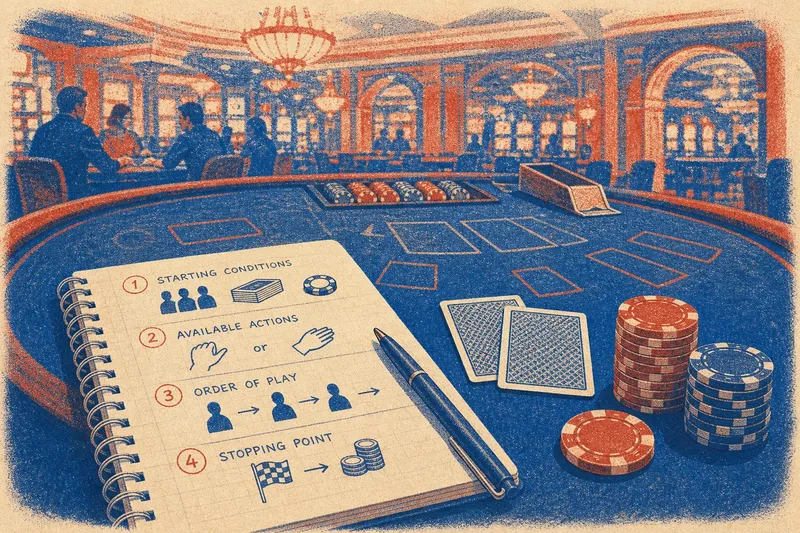
These prompts can guide a seminar, student society conversation or short written reflection. Each observation points to a choice about what to say next.
- Check the setting. If the account clearly concerns a casino, name that setting; if it is unclear, ask where the practice took place before interpreting it.
- Check the exact expression. If the person’s wording is available, quote it accurately; if it is not, paraphrase cautiously and do not present a guess as a quotation.
- Check whether the person explained the ritual. If they gave a personal or social meaning, discuss that account; if they did not, ask respectfully or leave their motive open.
- Check whether the statement concerns a feeling or an outcome. If it describes comfort or confidence, present it as an experience; if it claims to predict or change a result, distinguish the claim from evidence and do not repeat it as fact.
- Check whether the account is individual or shared. If several people describe the same custom, call it a shared practice among those speakers; if only one person is mentioned, do not generalise to a whole group or campus.
- Check the tone of your wording. If it mocks, romanticises or overstates the belief, revise it into neutral language about the account; if it is already specific and respectful, keep it open to discussion.
Why does casino luck appear in campus conversations?
Does a lucky charm change a game outcome?
A charm may have personal meaning to its owner, but that account does not establish an effect on a game. Discuss what the person says the charm means without presenting it as a way to predict an outcome.
How can students discuss luck respectfully?
Ask what a practice means to the person who uses it, and avoid ridicule or assumptions about their motives. Keep the discussion tied to the account offered rather than assigning the belief to a whole group.
Why does casino culture use the language of luck?
Luck offers familiar language for talking about uncertainty, hope and control. In a casino setting, it may also shape how someone describes a moment, but it does not explain how a game operates.
How is personal meaning different from evidence about an outcome?
Someone can describe a ritual as comforting or as a connection to another person. That report explains the meaning they give it; by itself, it does not support a cause-and-effect claim about a game.
Make room for different meanings at Đại học Bình Dương
Students at Đại học Bình Dương may bring different experiences and interpretations of chance to a discussion. A careful account does not assume that a custom is shared across families or student groups. It asks what a particular person says, and keeps that account within its stated limits.
When discussion touches on gambling, keep the focus cultural rather than promotional. No student should be pressed to disclose personal experience. If someone raises a concern about gambling-related harm, offer general support and direct them to an appropriate service or qualified professional.
The lucky label in casino culture is useful as a prompt to ask what a person is expressing, not as a shortcut to predicting a result. In campus conversation, that distinction lets luck remain a subject for cultural inquiry while keeping claims about games tied to evidence.